RuledPaper
Free printable · PDF, PNG, SVG
Printable Cornell Notes Template
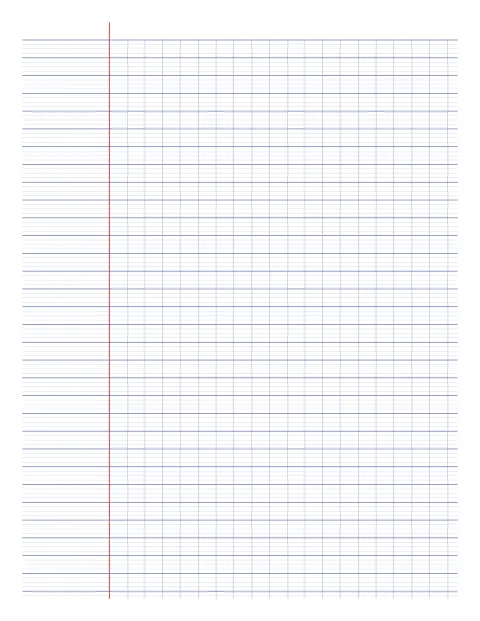
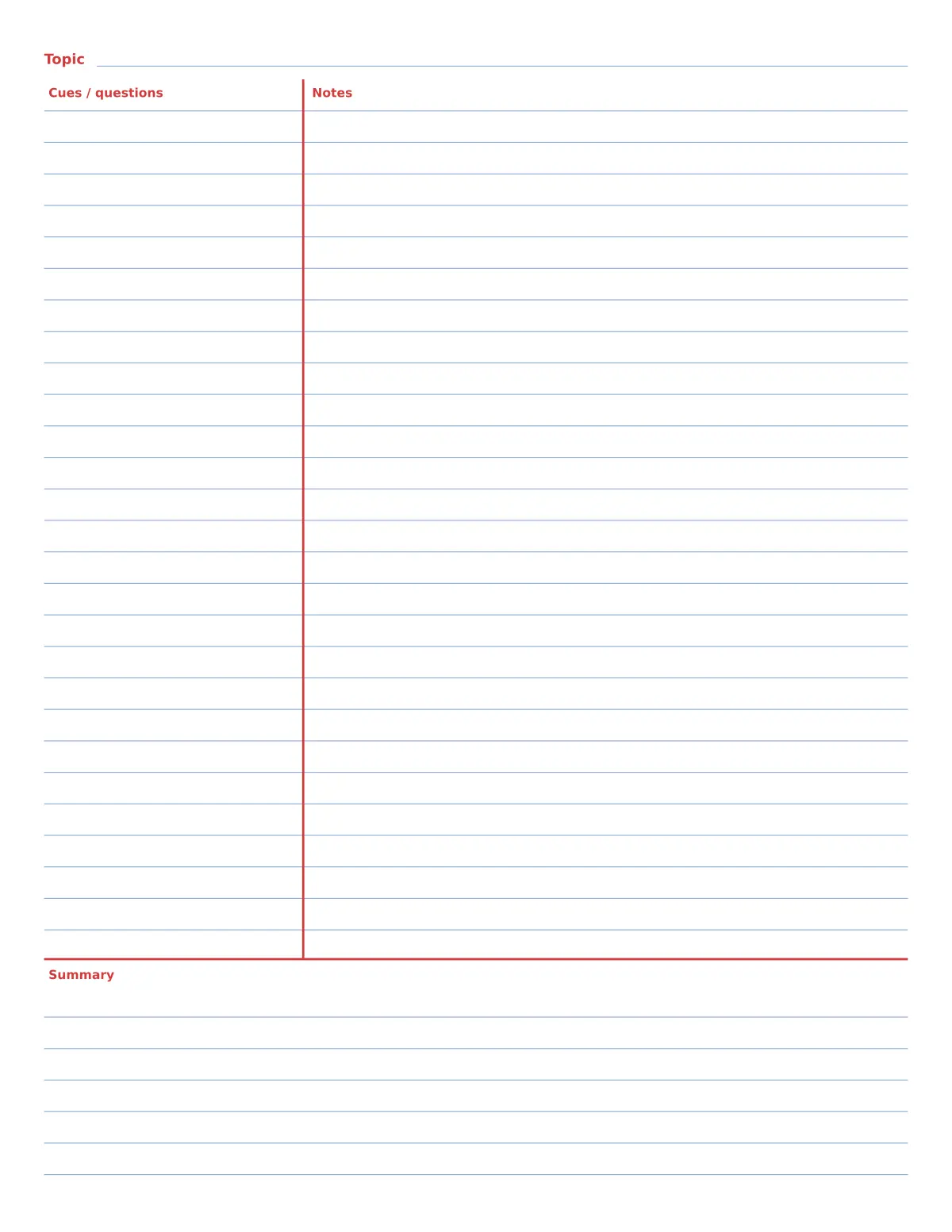
Cornell notes split one page into three jobs. The wide area on the right holds the notes you take during a lecture or while reading, the narrow cue column on the left collects questions and keywords you add afterwards, and the box at the bottom holds a short summary in your own words. The method was devised in the 1950s by Walter Pauk, an education professor at Cornell University, and he promoted it in his book How to Study in College. This generator draws the full layout with ruled lines, so every page is ready the moment it comes off the printer.
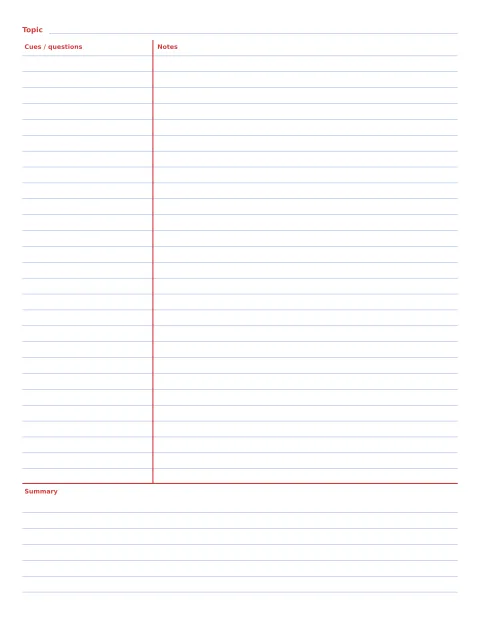
Preview of page 1. 215.9 mm × 279.4 mm. Print at 100% (“Actual size”) to keep the spacing exact.
What people use it for
- Lecture notes for high school, college and university courses
- Reading notes on textbook chapters and research articles
- Revision sheets that turn into self-quizzes before an exam
- Training sessions, webinars and meetings at work
- Sermon, podcast and documentary notes for personal study
Standard measurements
| Layout | Notes column on the right about twice as wide as the cue column on the left |
|---|---|
| Bottom space (Pauk) | Five to seven lines, or about 2 in (5 cm), left open for review |
| Origin | Walter Pauk, Cornell University, 1950s |
Tips for cornell notes
- Choose a line spacing that matches your normal handwriting; about 7 mm (9/32 in) suits most adults, while larger writers may prefer 8 or 9 mm.
- Turn on the header so each sheet has room for the course name, the date and the topic, which makes a binder of notes easy to sort later.
- During class write only in the right-hand area, using short phrases and abbreviations instead of full sentences.
- Within a day, read the notes again and write questions or keywords in the cue column next to the matching lines.
- Finish by writing two to four sentences in the summary box; to revise, cover the right side and answer the cues from memory.
Printing tip: in the print dialog choose Actual size or 100%, not “Fit to page”, or the spacing shrinks slightly. How we keep sizes exact.
Questions
Who invented the Cornell note-taking system?
Walter Pauk, an education professor at Cornell University, devised it in the 1950s and described it in his widely used guide How to Study in College.
How wide should the cue column be?
The note area is usually about twice as wide as the cue column. On this sheet the proportions are fixed so the layout looks the same on A4, Letter or A5, and only the line spacing changes.
What goes in the summary section?
A brief recap of the whole page written after class. Pauk suggested leaving five to seven lines, about 2 inches (5 cm), at the bottom for this kind of review.
Can I use Cornell paper for subjects with math or diagrams?
Yes. Ignore the ruling where you need to sketch a graph or a formula, and keep the cue column for the question each example answers. Some students print the page in a lighter line color so drawings stand out.