RuledPaper
Free printable · PDF, PNG, SVG
Backslant (Left-Leaning) Guide Line Paper
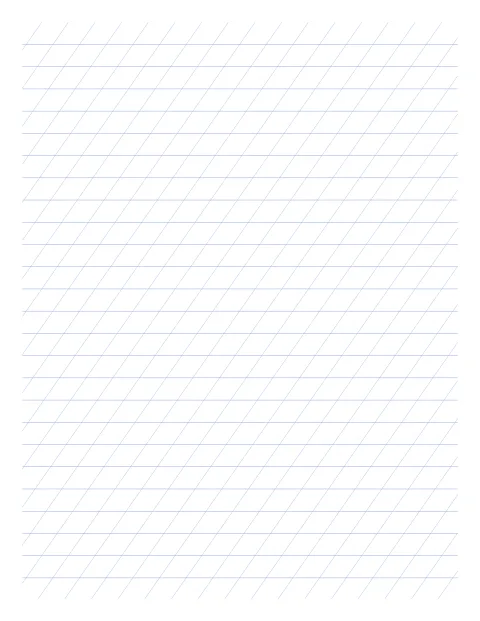
Backslant paper is the mirror of a calligraphy slant sheet: the diagonal guides lean to the left instead of the right. Many left-handed writers naturally tilt their letters this way, and lettering artists use a backslant for display styles that need a different rhythm. The sheet pairs the leaning guides with horizontal writing lines so letter height stays even too.
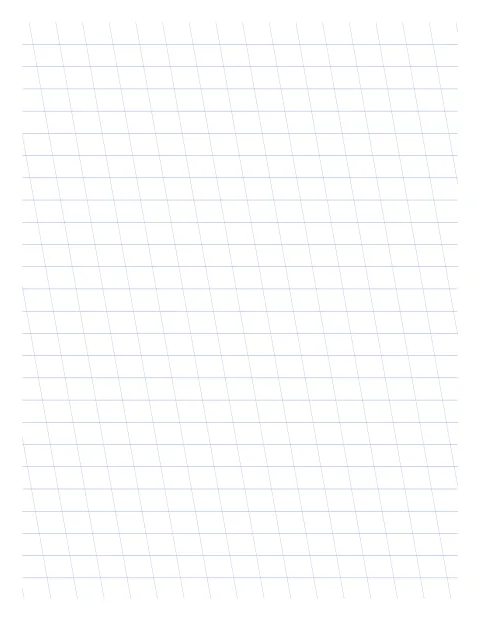
Preview of page 1. 215.9 mm × 279.4 mm. Print at 100% (“Actual size”) to keep the spacing exact.
What people use it for
- Left-handed writers who want a steady, deliberate backward lean
- Display lettering and logo sketches with a reversed italic feel
- Comic and poster titles where a left lean adds motion
- Drills that train hand control by writing against your natural slant
- Teachers preparing practice sheets for left-handed pupils
Tips for backslant lines
- Start with a modest angle such as 80 degrees from the baseline (10 degrees left of upright); a strong backslant is hard to keep legible over a full page.
- Use slightly wider line spacing than you would for upright writing, because left-leaning letters look cramped when the lines are tight.
- Left-handers who smudge ink can turn the page clockwise a little while writing; the printed guides keep the slant consistent even when the paper is rotated.
- Print one test page at 100% scale and write a full line before printing a stack, then adjust angle or spacing if it feels awkward.
Printing tip: in the print dialog choose Actual size or 100%, not “Fit to page”, or the spacing shrinks slightly. How we keep sizes exact.
Questions
What is backslant handwriting?
Backslant handwriting leans to the left, the opposite of the usual right-leaning cursive. It is common among left-handed writers and is also used on purpose as a lettering style.
Should left-handed children be made to write with a right slant?
Most handwriting guidance focuses on legibility, not on forcing a particular slant. An upright or slightly left-leaning hand is fine if it is consistent and readable, and a guide sheet helps with that consistency.
How is the angle set on this sheet?
Enter the angle from the baseline. Values above 90 degrees are not needed: the sheet already mirrors the lean, so 75 or 80 gives a clear but readable backslant.
Can I add a header line for a name and date?
Yes. Turn on the header option and a line appears at the top of every page, which is handy for classroom worksheets.