RuledPaper
Free printable · PDF, PNG, SVG
Isometric Dot Paper
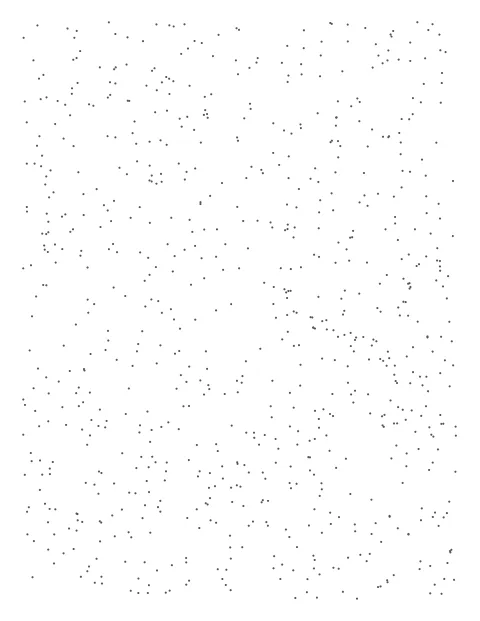
Isometric dot paper places dots so that every dot is the same distance from its six nearest neighbors, forming an invisible triangle grid. Students join the dots to draw cubes and 3D shapes, and math teachers use it for volume, nets and spatial reasoning tasks. Because only dots are printed, the finished drawing looks clean with no grid lines behind it.

Preview of page 1. 215.9 mm × 279.4 mm. Print at 100% (“Actual size”) to keep the spacing exact.
What people use it for
- Drawing cubes, stacked blocks and 3D shapes in math class
- Volume and surface area worksheets built from unit cubes
- Isometric sketches of rooms, game levels and products
- Spatial reasoning puzzles and visualization practice
- Planning isometric pixel art and illustrations
Standard measurements
| Dot arrangement | Each dot has six equidistant neighbors; joining them makes 60 degree triangles |
|---|---|
| Isometric axes | Three axes 120 degrees apart; a cube's outline is a regular hexagon |
Tips for isometric dot paper
- Hold the page so one set of dots runs straight up and down; vertical edges of your shapes follow those columns.
- Draw the top of a cube first as a diamond, then drop three vertical edges and close the bottom.
- For school worksheets use 1 cm (about 0.4 in) spacing so students can count unit cubes easily; use 5 mm for detailed drawings.
- Print with a slightly heavier dot weight than a bullet journal grid so dots remain visible when students draw over them in pencil.
Printing tip: in the print dialog choose Actual size or 100%, not “Fit to page”, or the spacing shrinks slightly. How we keep sizes exact.
Questions
What is isometric dot paper used for?
It is used to draw three-dimensional objects on flat paper, especially in geometry lessons about cubes, prisms and volume. The dot spacing keeps every edge the same length in all three directions.
Is isometric dot paper the same as triangle dot paper?
The dots sit in the same pattern. The difference is orientation: isometric paper is normally turned so that columns of dots are vertical, ready for drawing upright edges.
How do I draw a cube on isometric dot paper?
Join four dots to make a diamond for the top face, draw a vertical line down from three of its corners, then connect their lower ends. Every edge spans one dot spacing.
Why does my drawing look odd from some angles?
Isometric drawings have no vanishing points, so distant parts are not smaller. This makes measuring easy but can create optical illusions, such as shapes that seem to flip.