RuledPaper
Free printable · PDF, PNG, SVG
Random Dot Paper
Unlike every other grid on this site, random dot paper scatters dots across the page with no pattern at all. Artists use it to study stippling textures, teachers use it for creative drawing prompts, and parents use it for open-ended connect-the-dots play. It also prints as a quick starfield or speckled background for crafts.
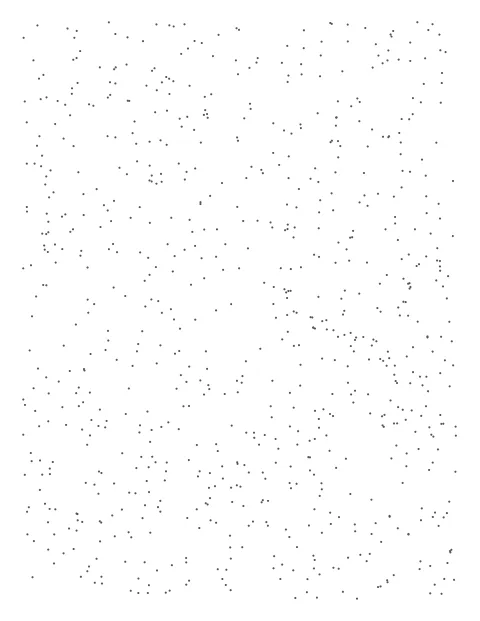
Preview of page 1. 215.9 mm × 279.4 mm. Print at 100% (“Actual size”) to keep the spacing exact.
What people use it for
- Stippling and pointillism texture studies
- Creative prompts: join any dots to invent an animal or object
- Starfield backgrounds for space-themed crafts and posters
- Constellation games where children name their own star pictures
- Speckled paper for card making and scrapbooking
Tips for random dots
- Generate several pages for a class, so students can compare how different dot arrangements lead to different drawings.
- For stippling practice, print with tiny pale dots and copy the density with your pen, adding more dots in shaded areas.
- For a starfield, print the dots in a bright color, then paint or color the background dark around them with watercolor or marker.
- Use A3 for wall posters and group drawing activities where several children work on one sheet.
Printing tip: in the print dialog choose Actual size or 100%, not “Fit to page”, or the spacing shrinks slightly. How we keep sizes exact.
Questions
What is random dot paper used for?
It is used for drawing games, stippling practice and decorative backgrounds. Because the dots do not form a grid, it encourages free drawing rather than precise construction.
How do I use it for a constellation activity?
Ask children to join dots with straight lines to make a picture, name it as a new constellation, and write a short story about it on the back.
Can it help with pointillism?
It shows how scattered dots read as a flat tone from a distance. Compare it with your own dotted shading to see where your marks clump or leave gaps.
Can I control how many dots appear?
Changing the spacing value changes how dense the field is. A small spacing packs the page with dots; a large spacing leaves open space for drawing.