RuledPaper
Free printable · PDF, PNG, SVG
Printable Storyboard Template
A storyboard lays out a film, video or animation as a sequence of simple drawings, like a comic of the planned shots. Each frame on this sheet has ruled lines underneath for dialogue, camera moves and timing. Walt Disney Productions helped popularize the method: animator Webb Smith is often credited with pinning separate scene drawings to a board, and the studio set up its own story department in the early 1930s. The same tool now serves filmmakers, advertisers, teachers and app designers.
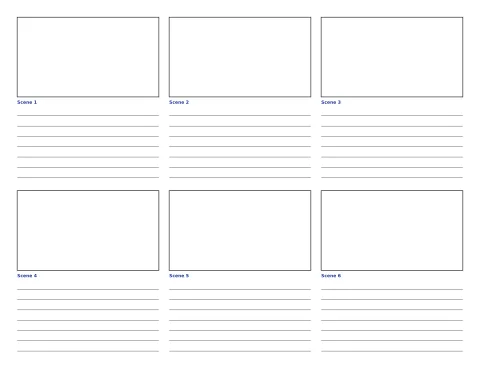
Preview of page 1. 279.4 mm × 215.9 mm. Print at 100% (“Actual size”) to keep the spacing exact.
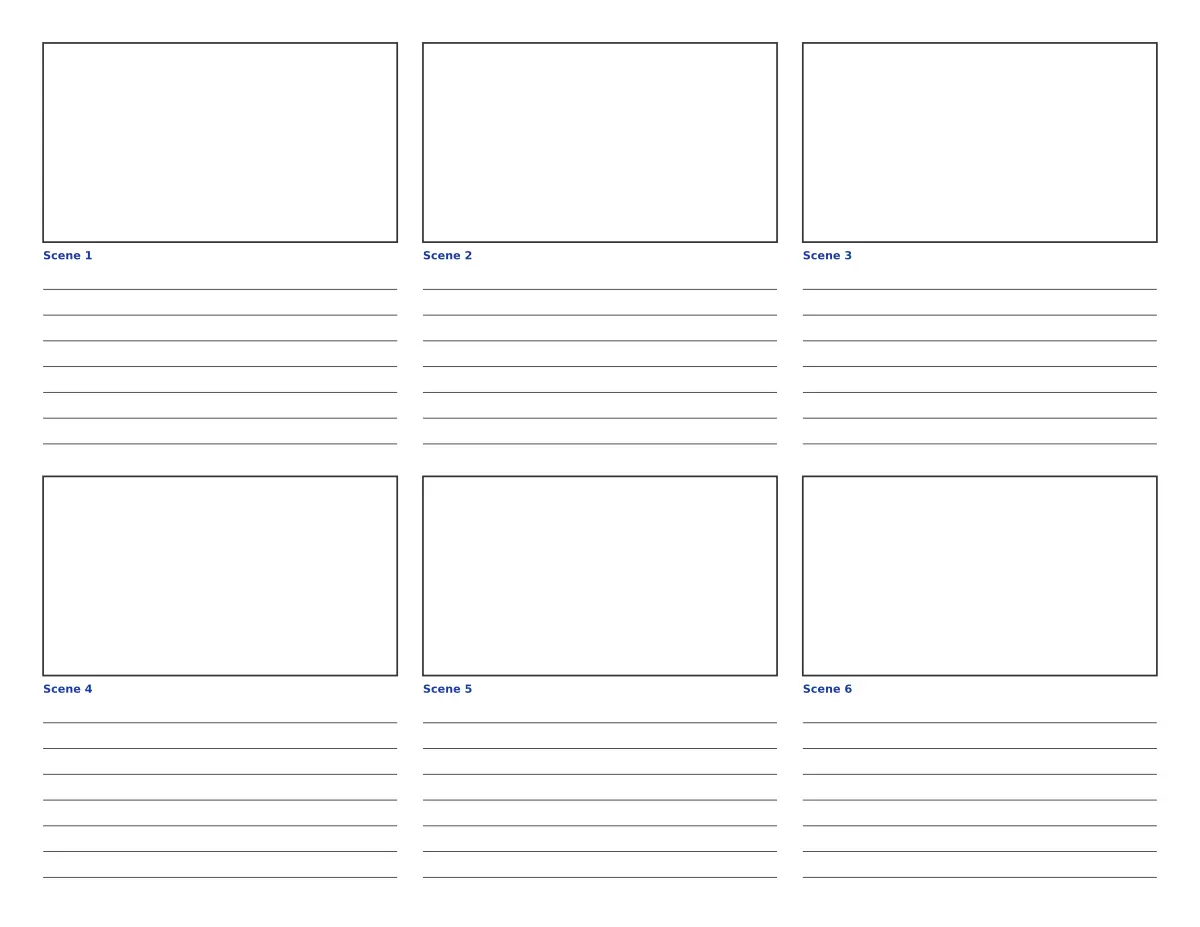
Ready-made storyboard sheet presets
What people use it for
- Planning YouTube videos, short films and music videos
- Animation and motion graphics previsualization
- Advertising concepts and pitch presentations
- User flows and screen sequences for app and web design
- Classroom story planning and comic projects
Tips for storyboard sheet
- Choose six frames for larger drawings with more detail, or eight frames when you need to map a longer sequence on one page.
- Use landscape orientation for widescreen video and portrait for vertical formats such as phone videos.
- Number each frame and write the shot type (wide, medium, close-up) and any camera movement on the lines underneath.
- Keep drawings rough: stick figures and arrows are enough to show framing and action.
- Pin the printed pages to a wall in order, then rearrange them to test a different edit before you shoot.
Printing tip: in the print dialog choose Actual size or 100%, not “Fit to page”, or the spacing shrinks slightly. How we keep sizes exact.
Questions
Who invented the storyboard?
Credit usually goes to Webb Smith at Walt Disney Productions, who pinned scene drawings to a board. A 2024 book instead credits Ted Sears, who worked at Fleischer Studios before Disney.
What should I write under each frame?
Dialogue or voiceover, the shot type, camera movement, sound cues and roughly how long the shot lasts. Short notes are enough.
Are storyboards only for films?
No. Agencies use them to pitch ads, and designers use them to show the screens a user moves through in an app or website, because changing a drawing is cheaper than changing finished work.
How many frames should a storyboard have?
As many as the story needs. A short clip may fit on one page, while a longer project needs many more; print the page count you need and number frames continuously.