RuledPaper
Free printable · PDF, PNG, SVG
Printable Isometric Graph Paper
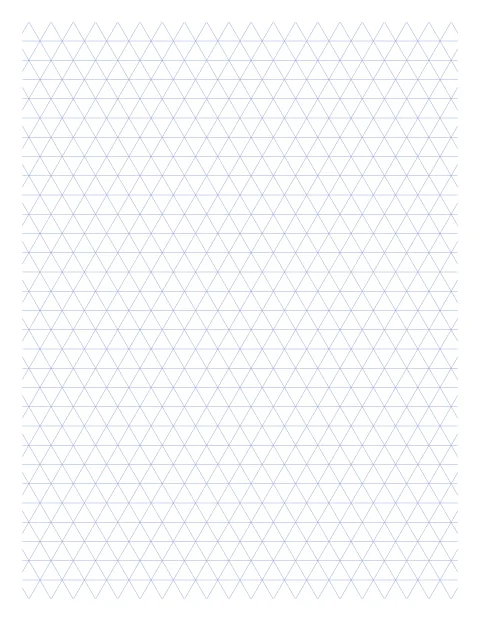
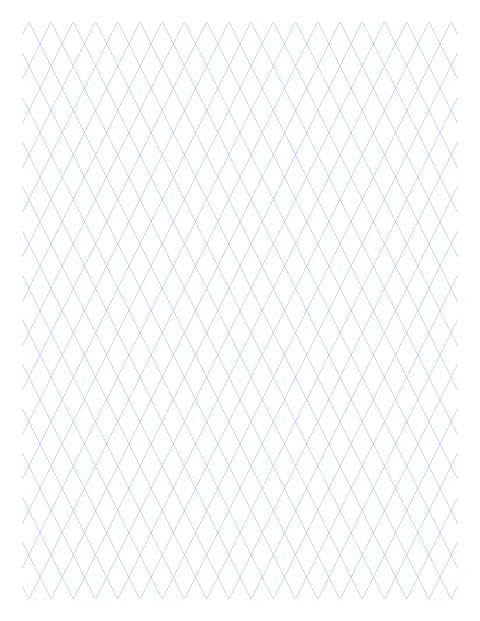
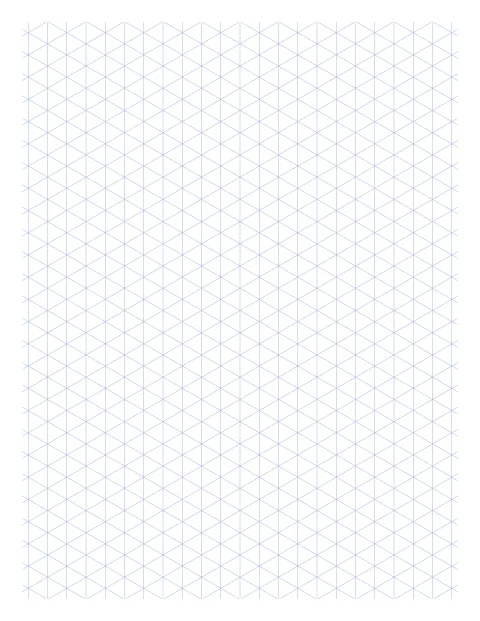
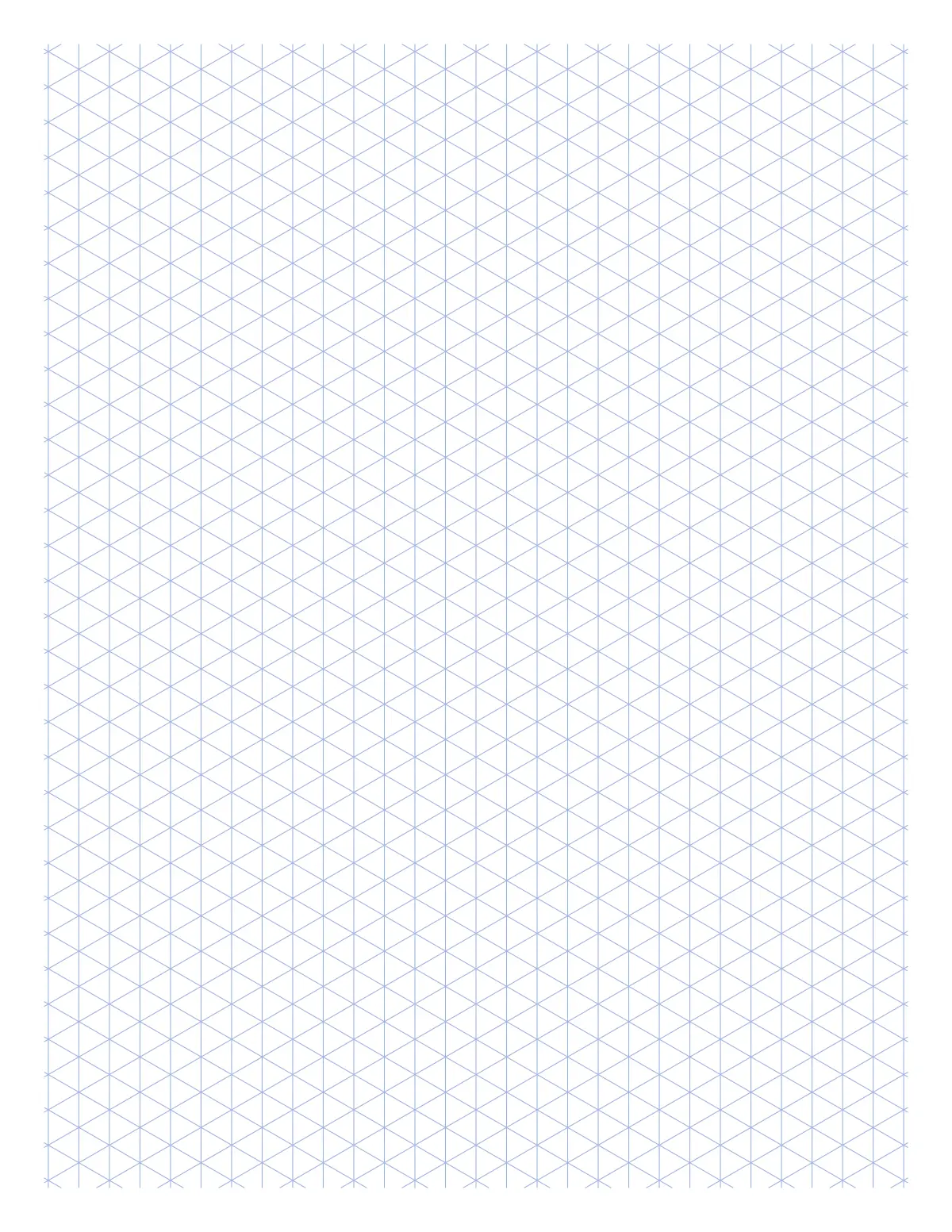
Isometric graph paper is ruled with vertical lines and two sets of lines at 30 degrees to the horizontal, one rising to the right and one rising to the left. Together they form a grid of small equilateral triangles that matches the angles of isometric projection, so a cube drawn on it looks three-dimensional without any vanishing points. Designers, engineers, game artists and students use it to sketch objects, rooms and levels quickly and accurately.
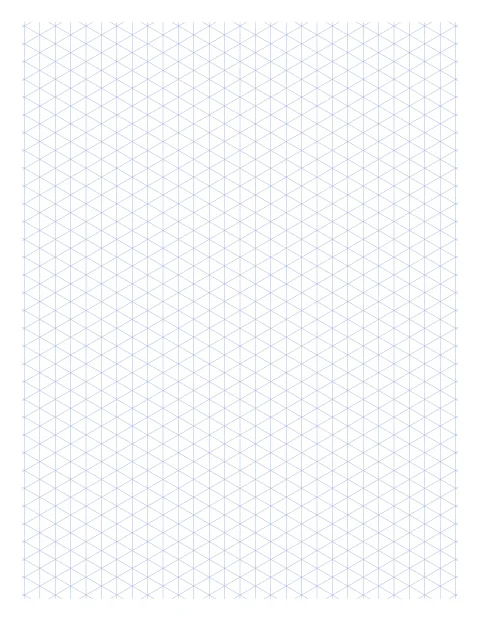
Preview of page 1. 215.9 mm × 279.4 mm. Print at 100% (“Actual size”) to keep the spacing exact.
Ready-made isometric graph paper presets
What people use it for
- Technical sketches of parts and assemblies
- Isometric pixel art and game level design
- Room and furniture layouts in 3D
- Math lessons on 3D shapes, nets and volume
- Lettering and logo designs with an isometric look
Standard measurements
| Line directions | Vertical, plus 30 degrees from horizontal in both directions |
|---|---|
| Pattern | A 60 degree grid of equilateral triangles |
Tips for isometric graph paper
- Set the spacing according to detail: small cells of 5 mm (about 3/16 in) for intricate parts, larger cells of 10 mm (about 3/8 in) for room sketches and classroom use.
- Draw height along the vertical lines and width and depth along the two 30 degree directions; every edge then lands on the grid.
- Shade the three visible faces of a box in three tones (light, medium, dark) to make the 3D effect obvious.
- Print with a pale line color so your drawing stands out, or a darker one if you plan to trace over it later.
- Rotate the page to landscape for wide scenes such as city blocks or long machinery.
Printing tip: in the print dialog choose Actual size or 100%, not “Fit to page”, or the spacing shrinks slightly. How we keep sizes exact.
Questions
What angle are isometric grid lines?
The slanted lines run at 30 degrees from the horizontal, rising left and right, and the third set is vertical. That gives the same angles used in isometric projection.
What is the difference between isometric paper and isometric dot paper?
Isometric paper prints full lines, while dot paper prints only the points where those lines would cross. Lines are faster for beginners; dots leave a cleaner finished drawing.
Why do isometric drawings have no vanishing point?
In isometric projection parallel edges stay parallel, so objects do not shrink with distance. That makes measuring easy but looks less natural than true perspective.
Can I use isometric paper for math?
Yes. It is ideal for drawing cubes built from unit blocks, counting volume, exploring nets of solids and studying tessellations of triangles and hexagons.