RuledPaper
Free printable · PDF, PNG, SVG
Chinese and Japanese Character Practice Grid
Character practice paper divides the page into squares, one for each character, with optional guide lines inside. Chinese learners use tianzige and mizige grids to keep strokes balanced, and Japanese learners use genkouyoushi style squares for kanji, kana and composition. Teachers, students and calligraphers print them by the stack.
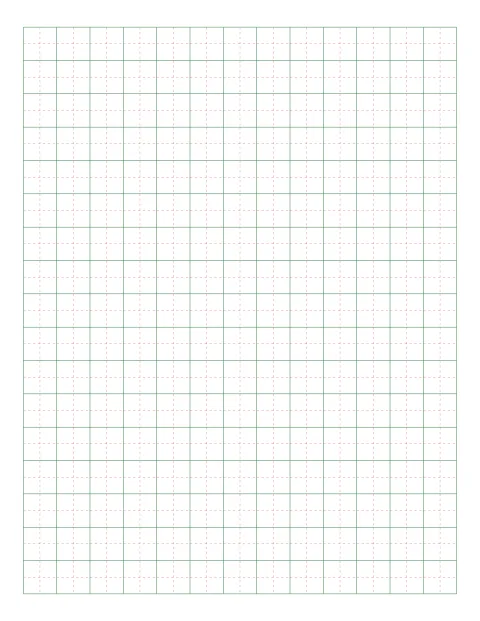
Preview of page 1. 215.9 mm × 279.4 mm. Print at 100% (“Actual size”) to keep the spacing exact.
What people use it for
- Practicing Chinese characters stroke by stroke
- Kanji, hiragana and katakana drills for Japanese learners
- Brush and hard-pen calligraphy practice
- Japanese essays and compositions in genkouyoushi format
- Copying vocabulary lists for memorization
Standard measurements
| Tianzige (田字格) | Square divided by a vertical and a horizontal center line, like the character 田 |
|---|---|
| Mizige (米字格) | Tianzige plus both diagonals, like the character 米 |
| Genkouyoushi (原稿用紙) | Usually 200 or 400 squares per sheet, commonly 20 squares per column |
Tips for character practice grid
- Start with tianzige: the cross lines help you place each component in the right quarter and keep characters the same size.
- Move to mizige when you work on diagonal strokes; the center point also gives the first stroke a fixed reference.
- Choose square size by script: around 15 to 20 mm (about 5/8 to 3/4 in) for beginners and brush work, smaller once your strokes are steady.
- Write one character per square regardless of how many strokes it has. Matching size across simple and complex characters is the main skill being trained.
Printing tip: in the print dialog choose Actual size or 100%, not “Fit to page”, or the spacing shrinks slightly. How we keep sizes exact.
Questions
What is tianzige?
Tianzige (田字格) is a grid of squares each divided into four quarters by a cross, named after the character 田, meaning field. It is the standard practice grid for children learning Chinese characters.
What is the difference between tianzige and mizige?
Mizige (米字格) adds two diagonal lines to the tianzige cross, making eight sections. The diagonals help with slanted strokes and give an exact center point.
What is genkouyoushi?
Genkō yōshi is Japanese manuscript paper with a square for each character. A common layout has 20 squares per column, written vertically from right to left, with 200 or 400 squares per sheet.
Where do punctuation marks go on genkouyoushi?
Punctuation usually takes its own square. Japanese full stops and commas sit in the top right corner of the square, while in Chinese usage they sit in the middle.