RuledPaper
Free printable · PDF, PNG, SVG
Honeycomb Hexagon Template
The honeycomb template draws hexagon outlines packed like the cells of a beehive. Where the hex grid page is set up for maps and games, this sheet is meant for cutting and decorating: English paper piecing papers, bee classroom crafts, wall decals and party decorations. Choose the hexagon size and print as many sheets as your project needs.
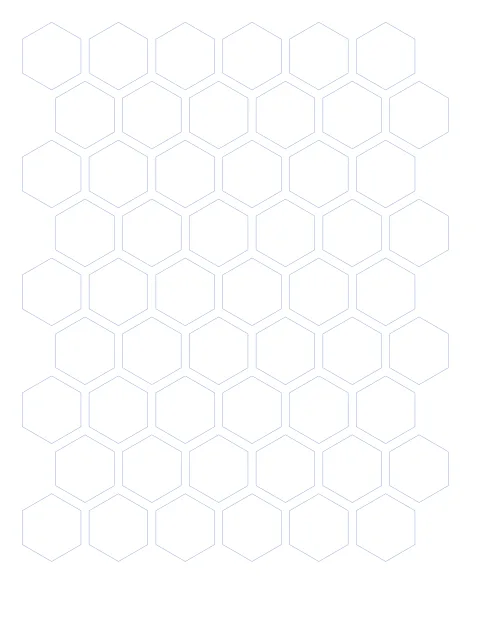
Preview of page 1. 215.9 mm × 279.4 mm. Print at 100% (“Actual size”) to keep the spacing exact.
What people use it for
- English paper piecing templates for hexagon quilts
- Bee and pollinator themed classroom crafts
- Wall decor and photo collage hexagons
- Honeycomb backgrounds for posters and invitations
- Cut-out game tiles for homemade board games
Tips for honeycomb template
- For paper piecing, set the hexagon to your finished patch size, for example 1 in (25.4 mm) sides, and print on card stock.
- Add your seam allowance when you cut fabric, not to the paper template; the printed outline is the finished size.
- For kids' crafts use large hexagons, 5 cm (about 2 in) or more, so small hands can cut them easily.
- Print in a gold or orange line color for bee projects so the outlines suit the theme after cutting.
Printing tip: in the print dialog choose Actual size or 100%, not “Fit to page”, or the spacing shrinks slightly. How we keep sizes exact.
Questions
How are hexagons measured for quilting?
Quilters usually name hexagons by the length of one side. A 1 inch hexagon has six sides of 1 inch and measures 2 inches from corner to opposite corner.
What is English paper piecing?
It is a hand-sewing method where fabric is folded and basted around paper shapes, often hexagons, then the shapes are stitched together edge to edge. The papers are removed once the patchwork is finished.
Why do bees build hexagons?
Hexagons tile without gaps and enclose the most area for a given wall length among the shapes that tile a plane. That efficiency makes the honeycomb a popular science topic for children.
What paper should I print on?
Plain paper works for drawing and classroom sheets. For templates you will reuse or sew around, print on thin card stock so the edges stay crisp.