RuledPaper
Free printable · preset
Printable Peyote Stitch Graph Paper
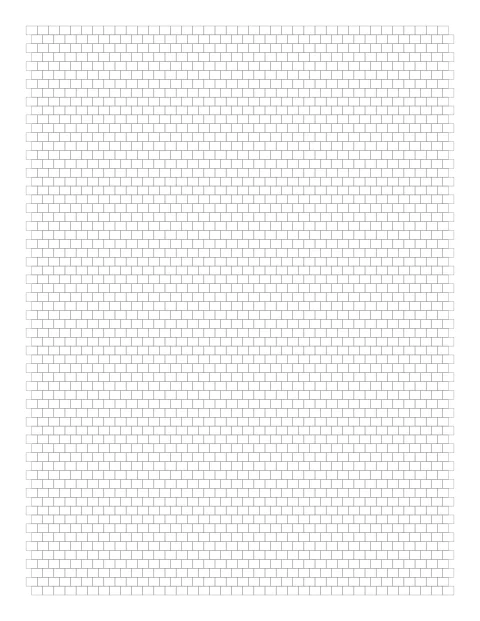
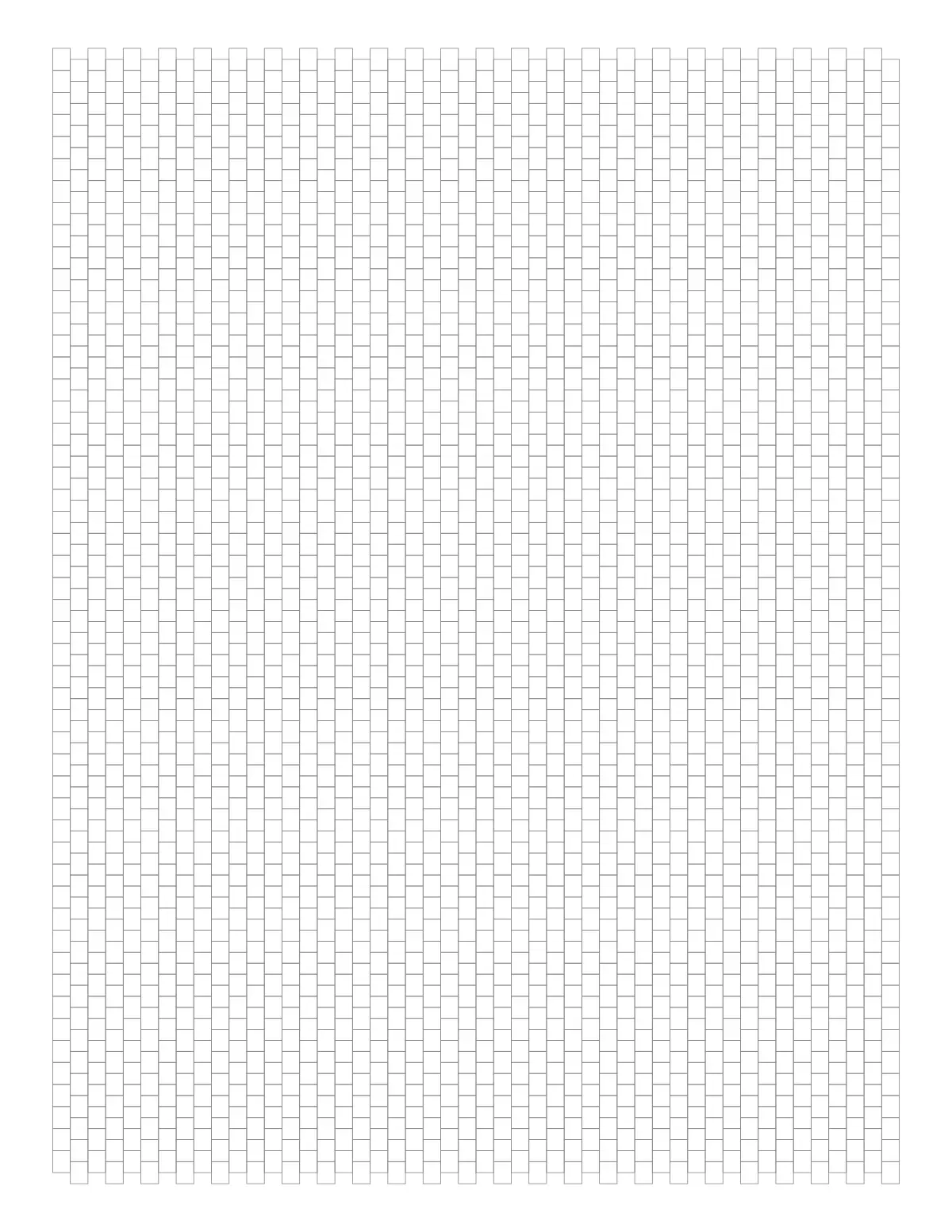
In peyote stitch each new bead sits in the gap between two beads of the previous row, so the columns zigzag: every other column is shifted half a bead up. This preset draws that layout with cells shaped like cylinder beads lying on their side, so you can design cuffs, bracelets, pen wraps and tubular pieces exactly as they will look.
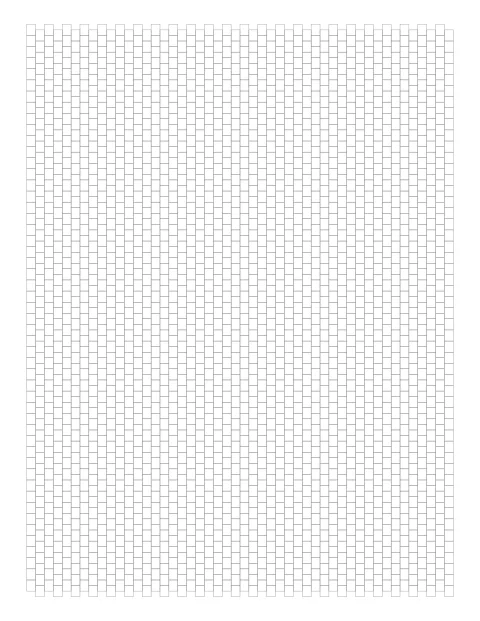
Preview of page 1. 215.9 mm × 279.4 mm. Print at 100% (“Actual size”) to keep the spacing exact.
Tips for this setting
- Count rows diagonally: in peyote, the first two rows are picked up together on the needle.
- For tubular peyote, chart one flat repeat as wide as the tube's circumference in beads.
- Keep cylinder beads for peyote charts if you can; their even shape matches the grid best.
- Mark the centre column before you start so symmetric motifs stay centred.
Bead weavers chart flat peyote bracelets, bookmarks and cuffs on this sheet, and plan tubular peyote covers for pens and lighters as one flat repeat. Beading teachers print blank sheets for a first even count project, and designers sketch on paper before moving a finished pattern into charting software.
Every option above can still be changed. For the full guide to bead graph paper, see the bead graph paper page.
Settings on this page
| Setting | Value | Set by |
|---|---|---|
| Paper size | US Letter in the US and Canada, A4 everywhere else (from your browser language) | Bead graph paper default |
| Orientation | Portrait | Bead graph paper default |
| Margin | 10 mm (0.394 in) on every side | Bead graph paper default |
| Stitch | Peyote stitch | This preset |
| Bead length (along the hole) | 4 mm (0.157 in) | Bead graph paper default |
| Bead width (diameter) | 5 mm (0.197 in) | Bead graph paper default |
| Line weight | 0.15 mm | Bead graph paper default |
This page changes the stitch from the standard bead graph paper settings. Paper size, orientation and margin sit in the Paper panel of the generator; the other settings are in the Bead graph paper panel. The address bar updates as you change them, so you can bookmark or share your own version.
Printing it at the right size
US Letter is 215.9 × 279.4 mm and A4 is 210 × 297 mm. Choose the size that is in your printer under Size before you download, because a print dialog that fits a Letter page onto A4 scales it to about 97%, and A4 onto Letter to about 94%.
Exact size matters here. If a print dialog fits A4 onto US Letter (about 94%), the bead length (along the hole) of 4 mm prints as 3.76 mm. Choose "Actual size" or "Scale 100%", then check one measurement on the printout with a ruler.
Questions
Why are the columns offset?
Each peyote bead sits between two beads of the row below, so every other column is half a bead higher. A straight grid would distort the pattern.
How big is a Delica 11/0?
Miyuki lists the Delica 11/0 at 1.6 mm outer diameter with a 0.8 mm hole. Chart cells are drawn larger but keep the bead's proportions.
What is the difference between even and odd count peyote?
It is the number of beads across each row. Even count peyote turns simply at both edges. Odd count gives you a single centre bead, which helps with symmetric motifs, but needs a special turn, such as the figure eight turn, at the end of every other row.