RuledPaper
Free printable · PDF, PNG, SVG
Printable Dots and Boxes Game
Dots and boxes is a pencil game for two players that needs nothing but a grid of dots. Players take turns joining two neighboring dots with a line; whoever closes the fourth side of a small box writes their initial inside and moves again. When every line has been drawn, the player with the most boxes wins. The French mathematician Édouard Lucas published it in the 19th century under the name la pipopipette, and it is still a staple of classrooms, restaurants and long journeys.

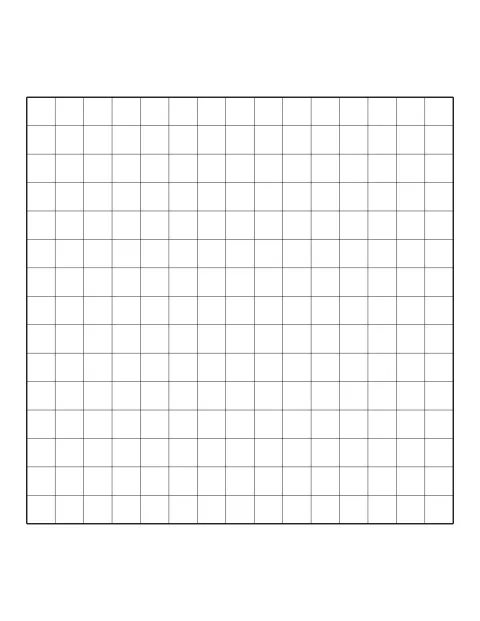
Preview of page 1. 215.9 mm × 279.4 mm. Print at 100% (“Actual size”) to keep the spacing exact.

What people use it for
- Quiet two-player games for travel and waiting rooms
- Early finisher activities in class
- Teaching strategy, counting and planning ahead
- Restaurant table and party games
- Math club challenges on larger boards
Tips for dots and boxes
- Choose the dot spacing: wide spacing for small hands and short games, tight spacing for a long game on a big board.
- Print several boards per page so you can play a series and keep score at the side.
- Use two pen colors, one per player, so it is clear who drew each line.
- Draw only horizontal or vertical lines between adjacent dots; diagonals are not allowed.
- When you complete a box, write your initial in it and take another turn straight away.
Printing tip: in the print dialog choose Actual size or 100%, not “Fit to page”, or the spacing shrinks slightly. How we keep sizes exact.
Questions
What are the rules of dots and boxes?
Players take turns drawing one horizontal or vertical line between two adjacent dots. Completing the fourth side of a box scores a point and earns another turn. The game ends when no lines remain, and the higher score wins.
What board size is best?
A board of 2 x 2 boxes (3 x 3 dots) is good for learning. Five by five boxes is considered a challenging size for experienced players while still being reasonably quick.
Who invented dots and boxes?
It was first published by Édouard Lucas, a French mathematician, who called it la pipopipette in the 19th century.
Is there a winning strategy?
Strong players avoid drawing the third side of any box and try to control long chains of boxes near the end. Counting chains carefully decides most close games.